
Prices:
- More than 65 years.
- Adults: 25-64 years.
- Youth: 7-24 years.
- Children: 0-6 years.
Opening dates (From tuesday to Sundays:
- Winter: From October 1 to the third friday of June
- Tuesday: 10:00 AM to 2:00 PM
- Wednesday to Saturday: 10:00 AM to 2:00 PM and 3:00 PM to 6:00 PM
- Monday closed, except holidays and the day before holidays.
- Summer: From the third saturday of June to September 30.
- Tuesday to Sunday: 10:00 AM to 2:00 PM and 3:00 PM to 7:00 PM
- Monday closed, except holidays and the day before holidays.
- Easter:
- 10:00 AM to 2:00 PM and 3:00 PM to 7:00 PM.
Closing dates: december 24, 25 and 31 / January 1 y 6.
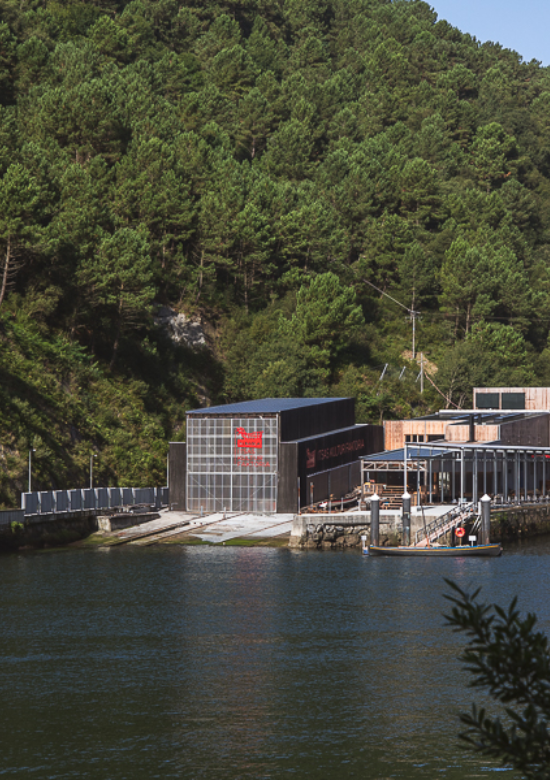
Where? Albaola Itsas Kultur Factoria Ondartxo, 1, 20110 Pasai San Pedro, Gipuzkoa
Duration: Recomended: 1 hour.
Languages: Basque, Spanish, English and French (under request).
Albaola has four separate areas.
The first area is an exhibition dedicated to Basque whalers, which takes you on a journey through the fascinating history of these whale hunters, following in the wake of the San Juan galleon. Using a diverse range of highly visual graphic materials, implements and models, the exhibition charts the voyage taken by this whaling ship that sunk in Newfoundland during the 16th century, and was ‘rescued’ centuries later by a team of underwater heritage archaeologists from Parcs Canada.
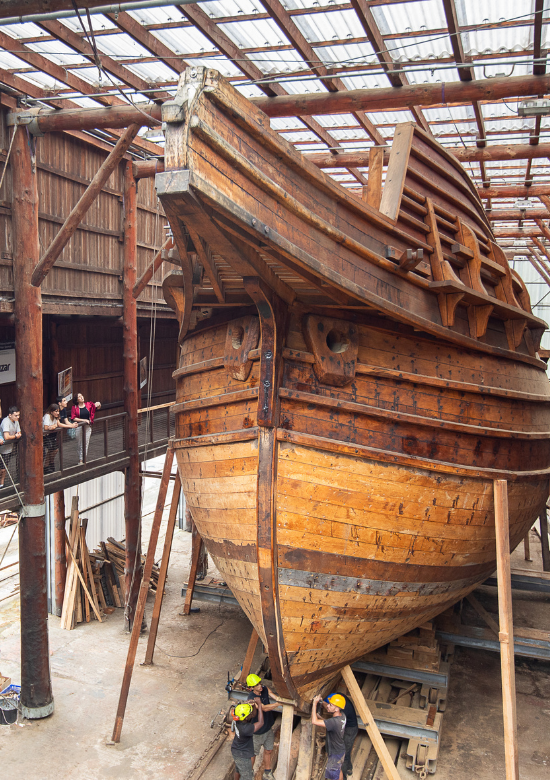
From here, moving up to the first floor (using either the stairs or the lift), the visit continues on to the traditional shipyard. From the stands, which also serve as seats, visitors can watch apprentices from the Albaola International Boatbuilding School as they work to build different types of vessels from different historical periods, or restore those that form part of our cultural heritage. After visiting the shipyard, visitors pass through a wooden tunnel to the area in which the replica of the San Juan galleon is currently being built. The project, which is sponsored by UNESCO, is the only one of its kind in the world. The vessel can be viewed from the bow and stern, and from port and starboard. Finally, the visit ends in the area dedicated to traditional boatbuilding crafts such as ironworking, oar and pulley building and rope and sail making.
Visitors can access the different spaces and look around them in accordance with their own interests and preferences, with no time limit.


